
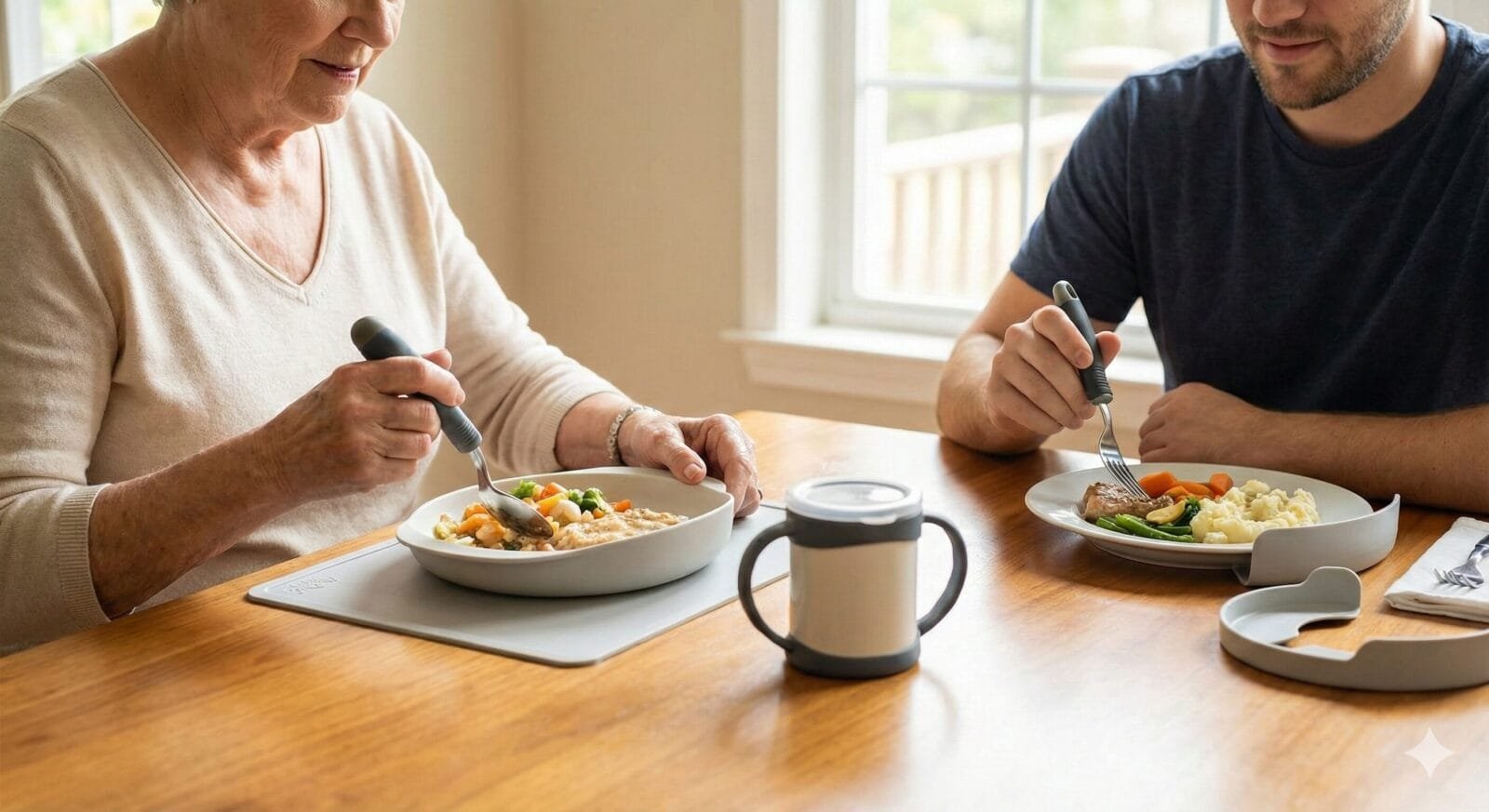
Mealtime should be a moment of connection and nourishment, but for many, it has become a source of daily frustration. Whether it’s a hand tremor that turns a simple soup into a struggle, or muscle weakness that makes a standard fork feel like a heavy weight, the loss of independence at the dinner table is deeply personal.
At Adaptive Life Guide, this isn’t just a topic we researched—it’s a challenge we live with. Having supported family members navigating the complexities of Muscular Dystrophy (MD) and mobility challenges, I’ve seen firsthand how the right tool can transform a stressful meal into a dignified, independent experience. Adaptive utensils for the disabled are not just “special silverware”; they are the bridge between needing help and reclaiming your autonomy.
In this guide, we’ve moved beyond basic product descriptions to curate the 5 best adaptive utensils For disabled for 2026. We’ve evaluated these tools based on weight, grip ergonomics, and real-world durability to help you or your loved ones eat with confidence again.
Why Trust This Guide? Most “Top 10” lists are generated by AI or generic reviewers. We focus specifically on tools that solve the unique mechanics of hand tremors, arthritis, and progressive muscle weakness, ensuring every recommendation serves a practical purpose in a real home.
Table of Contents
Understanding Adaptive Utensils
If you’re new to the concept, you might be wondering—what exactly are adaptive utensils? Simply put, these are specially designed eating tools that help people with physical limitations feed themselves with greater ease and safety. Unlike traditional silverware, adaptive utensils often have enlarged handles, bent shafts, or weighted grips to help reduce the effort needed to use them.
Who Uses Them?
They’re not just for elderly individuals in nursing homes. Adaptive utensils are game-changers for people with:
Arthritis
Parkinson’s disease
Multiple sclerosis
Cerebral palsy
Stroke recovery
Hand tremors
Muscular dystrophy
Spinal cord injuries
These tools aren’t about dependency—they’re about empowering users to eat independently again.
Why It Matters
Imagine trying to enjoy a meal while your hands shake uncontrollably, or you can’t even grasp a fork without pain shooting through your wrist. Adaptive utensils reduce those barriers. They put control back in the hands of users—sometimes literally.
Key Features to Look for in Adaptive Utensils
Let’s talk about what separates a good utensil from a great one. Here’s what you want to keep an eye out for:
1. Ergonomic Design
Look for utensils that fit naturally in the hand, especially if grip strength is limited. Curved or angled heads can make it easier to bring food to your mouth.
2. Non-Slip Grip
Soft rubberized handles with textures help users hold onto their utensils securely—even if their hands are wet or shaking.
3. Adjustable or Bendable Designs
Some forks and spoons can be bent to different angles, which is perfect for those who have limited wrist movement or arm control.
4. Weighting Options
Weighted utensils can help reduce the effects of hand tremors by keeping movements steady.
5. Dishwasher Safe
Cleaning should be easy, not a chore. Make sure the utensils are safe for the dishwasher to maintain hygiene without extra work.
Choosing utensils with these features ensures that they aren’t just functional but also comfortable and practical for daily use.
Benefits of Using Adaptive Utensils
What’s the real payoff? Adaptive utensils do more than just help you eat—they help you live better. Here’s how:
1. Increased Independence
No more relying on others for every bite. These tools enable users to feed themselves, building a sense of autonomy.
2. Improved Confidence and Dignity
There’s something deeply personal and empowering about feeding yourself. It promotes self-esteem and dignity, especially in social situations.
3. Enhanced Safety
Adaptive utensils are designed to prevent spills and minimize choking risks. With better control, users can manage each bite more safely.
4. Time-Saving
Meals become less of a struggle and more of a routine again. You get your time and energy back.
5. Better Nutrition
When meals aren’t frustrating, users are more likely to eat fully and regularly, which leads to better overall health.
For caregivers, it means less hands-on assistance and more peace of mind knowing your loved one is eating safely.
Recent Posts
Understanding Adaptive Utensils
If you’re new to the concept, you might be wondering—what exactly are adaptive utensils? Simply put, these are specially designed eating tools that help people with physical limitations feed themselves with greater ease and safety. Unlike traditional silverware, adaptive utensils often have enlarged handles, bent shafts, or weighted grips to help reduce the effort needed to use them.
Who Uses Them?
They’re not just for elderly individuals in nursing homes. Adaptive utensils are game-changers for people with:
Arthritis
Parkinson’s disease
Multiple sclerosis
Cerebral palsy
Stroke recovery
Hand tremors
Muscular dystrophy
Spinal cord injuries
These tools aren’t about dependency—they’re about empowering users to eat independently again.
Why It Matters
Imagine trying to enjoy a meal while your hands shake uncontrollably, or you can’t even grasp a fork without pain shooting through your wrist. Adaptive utensils reduce those barriers. They put control back in the hands of users—sometimes literally.
Key Features to Look for in Adaptive Utensils
Let’s talk about what separates a good utensil from a great one. Here’s what you want to keep an eye out for:
1. Ergonomic Design
Look for utensils that fit naturally in the hand, especially if grip strength is limited. Curved or angled heads can make it easier to bring food to your mouth.
2. Non-Slip Grip
Soft rubberized handles with textures help users hold onto their utensils securely—even if their hands are wet or shaking.
3. Adjustable or Bendable Designs
Some forks and spoons can be bent to different angles, which is perfect for those who have limited wrist movement or arm control.
4. Weighting Options
Weighted utensils can help reduce the effects of hand tremors by keeping movements steady.
5. Dishwasher Safe
Cleaning should be easy, not a chore. Make sure the utensils are safe for the dishwasher to maintain hygiene without extra work.
Choosing utensils with these features ensures that they aren’t just functional but also comfortable and practical for daily use.
Benefits of Using Adaptive Utensils
What’s the real payoff? Adaptive utensils do more than just help you eat—they help you live better. Here’s how:
1. Increased Independence
No more relying on others for every bite. These tools enable users to feed themselves, building a sense of autonomy.
2. Improved Confidence and Dignity
There’s something deeply personal and empowering about feeding yourself. It promotes self-esteem and dignity, especially in social situations.
3. Enhanced Safety
Adaptive utensils are designed to prevent spills and minimize choking risks. With better control, users can manage each bite more safely.
4. Time-Saving
Meals become less of a struggle and more of a routine again. You get your time and energy back.
5. Better Nutrition
When meals aren’t frustrating, users are more likely to eat fully and regularly, which leads to better overall health.
For caregivers, it means less hands-on assistance and more peace of mind knowing your loved one is eating safely.
5 Best Adaptive Utensils for Disabled and Mobility-Challenged People Available on Amazon
Let’s cut to the chase—these are the top-rated, highly recommended utensils that you should consider. We’ve included affiliate links so you can easily check them out and support our mission at adaptivelifeguide.com.
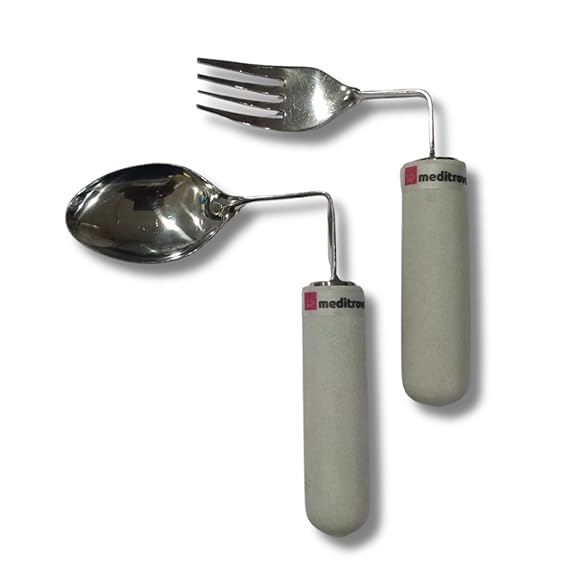
1. Right-Handed Anti-Shake Spoon & Fork Set
Best For: Right-handed individuals needing stabilization and wrist relief.
Targeted Alignment: Features a specialized right-handed bend to align naturally with a standard feeding posture.
Tremor Control: The anti-shake design effectively reduces the impact of hand tremors from Parkinson’s or arthritis.
Wrist Relief: Angled heads allow for eating with significantly less wrist-twisting.
Grip Support: Oversized, non-slip handles are designed for users with weak grip strength or muscle fatigue.
Price: ₹1,000–₹1,200.
Buy on Amazon (Rating: 5/5).
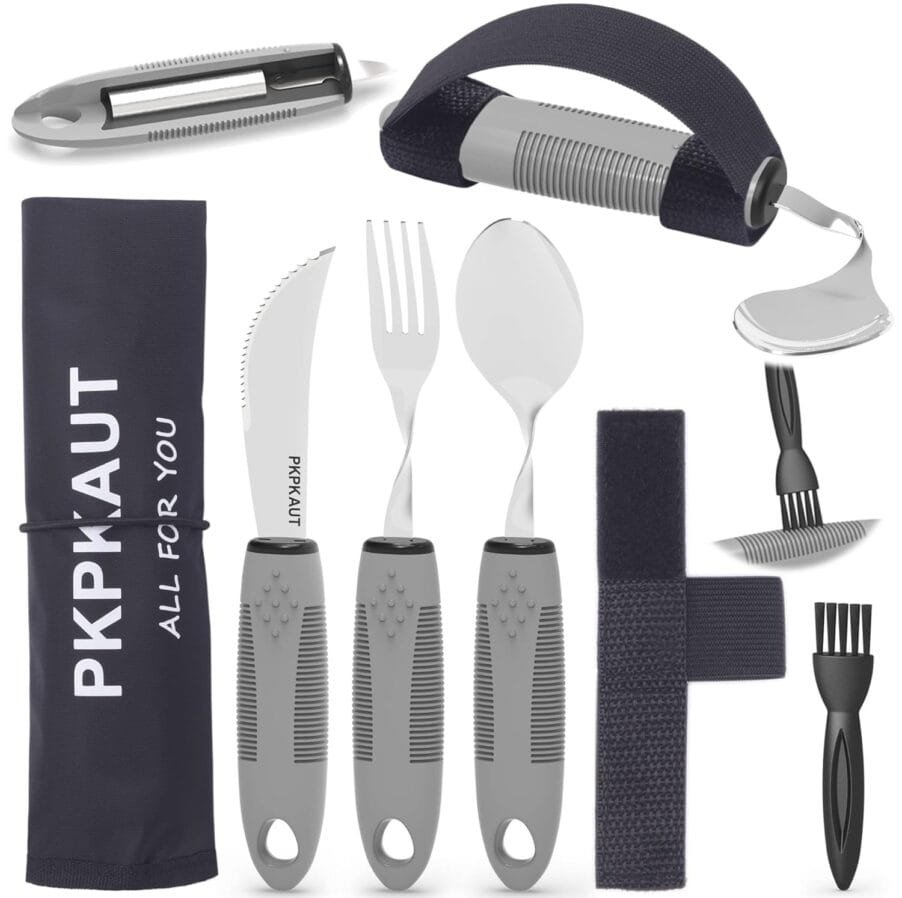
2. 6-Piece Weighted Parkinson’s Silverware & Travel Kit
Best For: Users with severe tremors who need a comprehensive, portable solution.
Stabilizing Weight: At 4.0 oz, these utensils are weighted to effectively relieve heavy hand tremors.
Total Versatility: The 180-degree bendable spoon can be customized for either left or right-handed use.
Universal Cuff: Includes an adjustable Velcro hand strap for those with little to no hand strength.
Full Kit: Comes with a rocker knife, fork, spoon, strap, cleaning brush, and a travel bag.
Price: ₹2,700–₹3,000.
Buy on Amazon (Rating: 4.4/5).
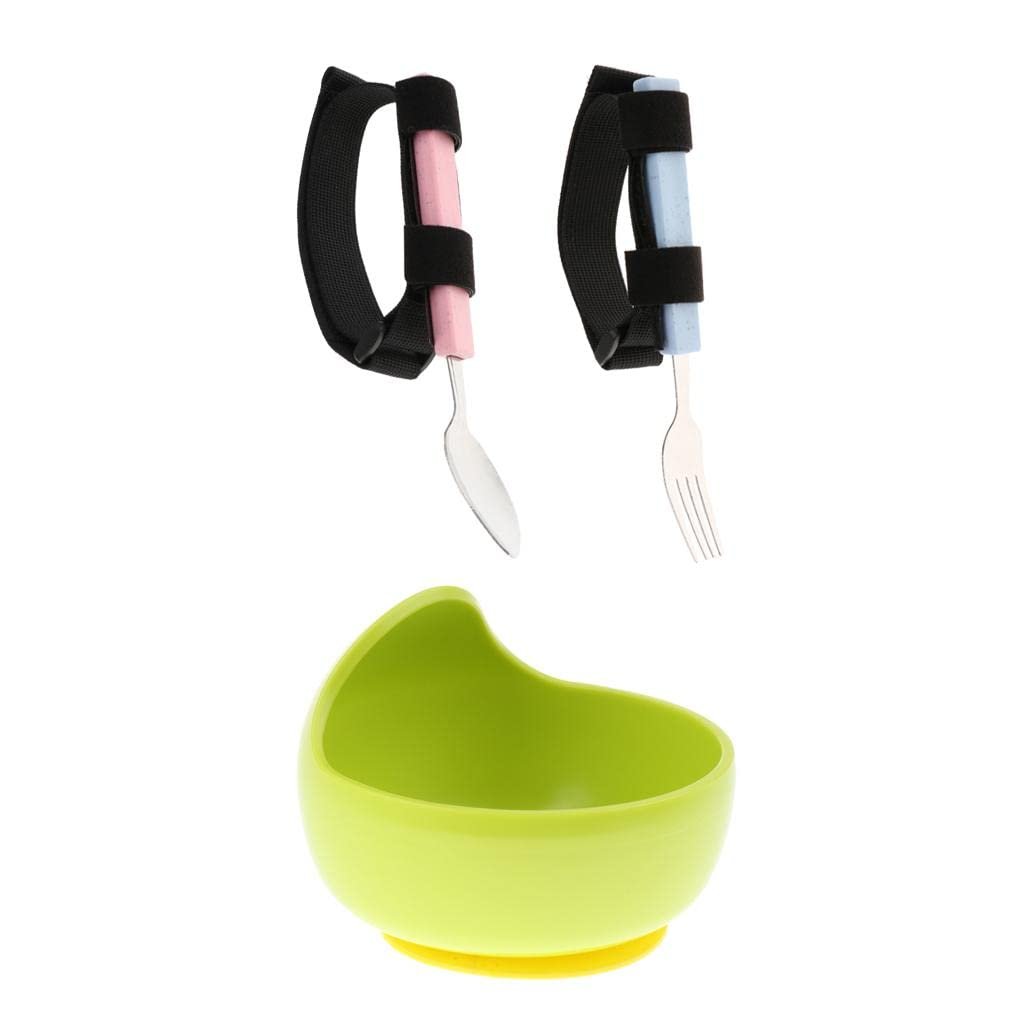
3. CALANDIS® Soft-Grip Adaptive Spoon
Best For: Individuals with sensitive hands or finger deformations.
Soft Material: Features a comfortable ABS and stainless steel construction for a gentler grip.
Safe & Non-Toxic: Made with food-grade, odor-free materials.
Versatile Aid: Specifically designed for hand spasms, finger trembling, and grip loss.
Price: ₹1,400–₹1,600.
Buy on Amazon (Rating: 4.1/5).
4. Bnf 2-Piece Angled & Deep-Bowl Spoon Set
Best For: Users who require a deeper spoon for liquids and reduced wrist stress.
Deepened Bowl: The spoon bowl is extra deep, making it better suited for soup and solid food.
Wrist Comfort: The angled design reduces upper extremity stress and increases eating functionality.
Quality Finish: Made of manually polished, harmless stainless steel.
Price: ₹850–₹1,000.
Buy on Amazon (Rating: 4/5).
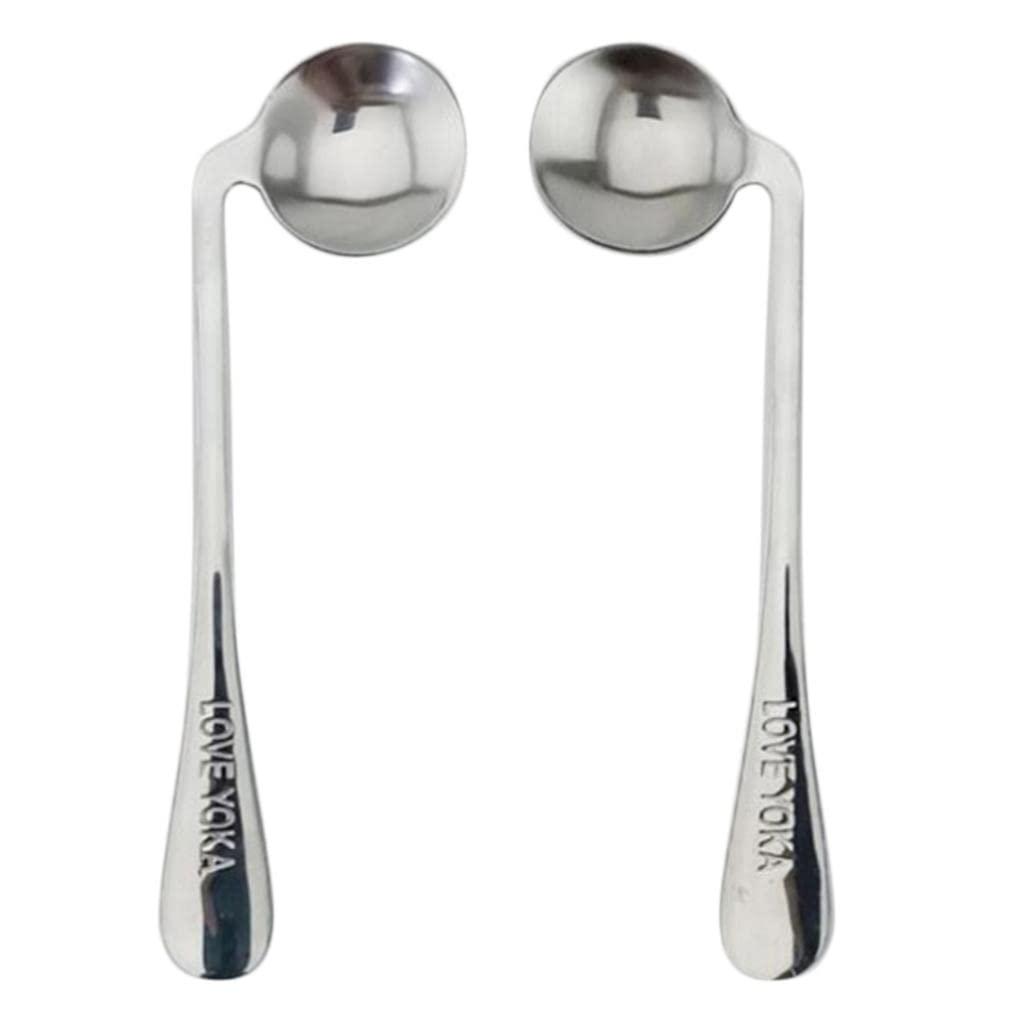
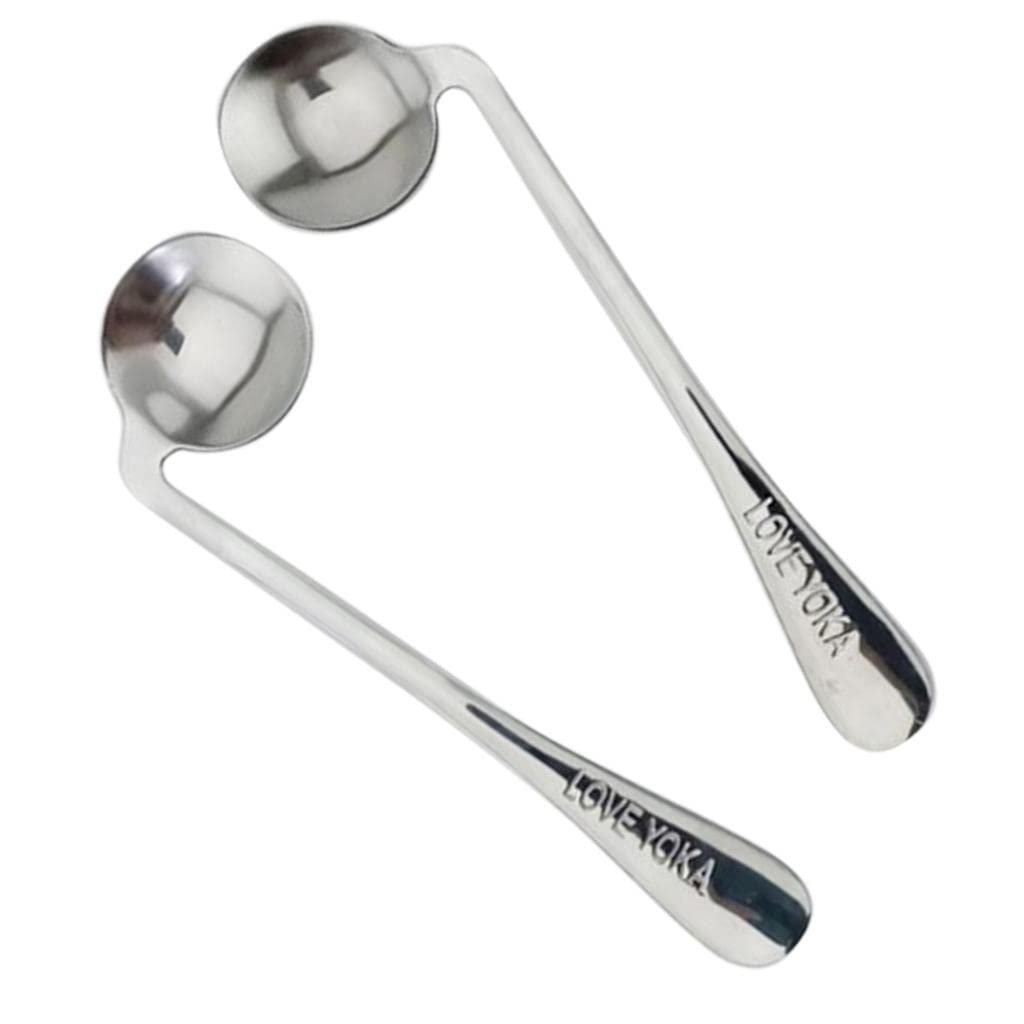
5. 2-Piece Premium Stainless Steel Angled Spoon Set
Best For: Clinical or home care settings requiring simple, durable angled tools.
Wrist Relief: Angled heads are designed to reduce wrist stress for those with limited motion.
Ergonomic Comfort: Provides increased functionality and confidence during meals.
Harmless Material: Features a durable, manually polished stainless steel surface.
Price: ₹850–₹1,000.
Buy on Amazon (Rating: 4.0/5).
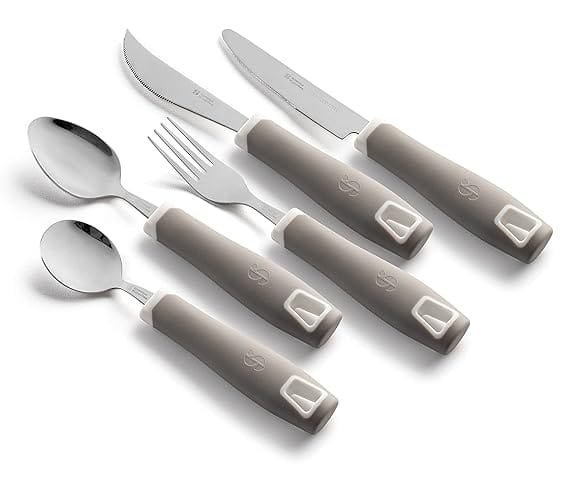
6. Special Supplies Adaptive Utensils 5-Piece Set
Best For: All-around meal versatility with color-coded personalization.
Wide Ribbed Grip: Each utensil features a wider, ribbed handle designed to improve dexterity and control for those living with Parkinson’s, arthritis, or hand tremors.
Non-Weighted Support: These tools use a lightweight, non-weighted design to provide support without adding extra bulk or heaviness during use.
Comprehensive 5-Piece Set: Unlike smaller sets, this includes a fork, knife, dinner spoon, soup spoon, and a specialized curved knife to cover all meal types.
Premium Materials: Combines food-grade safe silicone handles with durable, dishwasher-safe stainless steel for long-lasting hygiene.
Kitchen Personalization: Available in multiple colors, allowing you to choose a set that matches your home decor or helps with visual identification.
Price: ₹25,00–₹2,800
Buy on Amazon (Rating: 4.6/5).
Pros & Cons comparison table
| Product | Pros | Cons | Link |
|---|---|---|---|
| Anti-Shake Set | Natural right-hand angle; non-slip grip. | Right-hand only; not weighted. | View on Amazon |
| Weighted 6-Pc Kit | Includes hand strap; 180° bend; travel bag. | Higher price point; heavier to carry. | View on Amazon |
| CALANDIS® Spoon | Soft, comfortable grip; non-toxic material. | Single spoon only; no fork included. | View on Amazon |
| Bnf Angled Set | Deep bowl for soup; reduces wrist stress. | Not weighted; no hand straps. | View on Amazon |
| Premium Angled Set | Clinical-grade durability; polished steel. | Basic design; lacks specialized grips. | View on Amazon |
| Special Supplies 5-Pc | Wide ribbed grip; includes curved knife. | Non-weighted; may not suit heavy tremors. | View on Amazon |
How to Choose the Right Adaptive Utensil
Not all adaptive utensils are created equal, and what works for one person might not work for another. Choosing the right tool starts with understanding your needs and limitations.
1. Assess Your Physical Limitations
Do you struggle with tremors?
Is your grip weak or painful?
Can you bend your wrist easily?
Answering these questions will point you toward specific designs, such as bendable shafts or weighted handles.
2. Consult with a Specialist
Occupational therapists are trained to recommend tools based on physical and cognitive assessments. A 30-minute session can make all the difference in choosing the best solution.
3. Trial and Error
Sometimes, the only way to know what works is to try different styles. Buy utensils individually if possible before investing in a full set.
4. Consider Aesthetics
Yes, looks matter—especially for utensils that will be used daily. Choose designs that preserve dignity and don’t make users feel self-conscious.
5. Durability and Ease of Maintenance
Plastic utensils may wear down quickly, while stainless steel versions last longer and hold up well in the dishwasher.
By taking these steps, you’ll find a utensil that enhances not just your mealtime, but your quality of life.
Cleaning and Maintenance Tips
Let’s be honest—nobody wants to spend more time than necessary cleaning up after a meal. That’s why choosing low-maintenance utensils is crucial.
1. Use the Dishwasher
Always check the label, but most high-quality adaptive utensils (like the ones listed above) are dishwasher safe. Place them on the top rack and avoid heavy cycles to preserve rubberized handles.
2. Hand Washing Tips
Use warm soapy water and a sponge to gently scrub the handles. Avoid abrasive scouring pads as they can damage soft grip surfaces.
3. Dry Thoroughly
Mildew can form on rubberized surfaces. Make sure the utensils are completely dry before putting them away, especially if stored in a drawer.
4. Storage Solutions
Consider a dedicated utensil tray or a storage case to avoid damage and keep them organized.
5. When to Replace Them
Look out for cracks, discoloration, or loosened grips. These are signs it’s time for a replacement.
Good maintenance not only prolongs the life of the utensils but also ensures hygiene and safety.
Common Myths About Adaptive Utensils
Adaptive utensils come with their fair share of misconceptions, often rooted in outdated thinking or lack of exposure. Let’s debunk a few myths to clear the air.
Myth 1: “They’re Only for the Elderly”
Absolutely not! While seniors do benefit from them, adaptive utensils are used by people of all ages—children with developmental delays, young adults with spinal cord injuries, and middle-aged individuals recovering from surgeries.
Myth 2: “They Look Like Hospital Tools”
Modern designs are sleek and stylish. They look no different from high-end flatware sets. They blend right in at any dinner table.
Myth 3: “They Don’t Make a Real Difference”
This couldn’t be more wrong. For many users, adaptive utensils mark the difference between needing full-time assistance and being able to eat independently.
Myth 4: “They’re Too Expensive”
Some high-end sets cost more, yes. But many effective utensils are available for under $20, making them affordable for almost any budget.
Myth 5: “They’re a Sign of Weakness”
Using tools to overcome physical limitations isn’t weakness—it’s strength. Choosing independence takes courage, and adaptive utensils are a step in that direction.
Dispelling these myths helps encourage wider adoption and normalizes assistive technology as a part of everyday life.
Tips to Help Caregivers Assist More Effectively
Caregivers play a crucial role in supporting individuals with mobility issues. While adaptive utensils make mealtimes easier, proper caregiving ensures those tools are used effectively and comfortably.
1. Educate Yourself
Understand how each utensil works. Read manuals, watch tutorial videos, or attend demonstrations if available.
2. Encourage Independence
It’s tempting to feed someone quickly to save time, but let them try on their own. The process may be slower, but the payoff in confidence and ability is huge.
3. Create a Comfortable Mealtime Setup
Ensure the seating arrangement is right. The person should sit upright, at a comfortable table height, with everything within reach.
4. Practice Patience
Progress can be slow, especially for stroke patients or individuals with degenerative conditions. Your encouragement goes a long way.
5. Routine and Consistency
Use the same tools, in the same spot, at the same time. Familiar routines build muscle memory and reduce confusion.
With these strategies, caregivers can enhance the impact of adaptive utensils and create a more empowering environment.
Encouraging Independence at Mealtime
For many people with disabilities, eating independently can feel like climbing a mountain. But it doesn’t have to be that way. With the right environment and tools, mealtime can become a moment of pride and satisfaction.
1. Choose the Right Location
Avoid high-traffic or noisy environments that could cause stress or distraction. A quiet, well-lit room makes a big difference.
2. Use Supportive Dining Accessories
Pair utensils with adaptive plates and bowls—ones with high sides, non-slip bases, or suction cups to keep them in place.
3. Break Tasks Into Steps
Instead of overwhelming the person, guide them step-by-step. For instance:
Step 1: Grasp the utensil.
Step 2: Scoop the food.
Step 3: Lift to mouth.
4. Offer Positive Reinforcement
Even if a task isn’t completed perfectly, praise the effort. Every small win builds confidence.
5. Remove Unnecessary Obstacles
Make sure the dining area is clutter-free. Remove any distractions that may cause confusion or anxiety.
The goal is to reduce frustration and restore dignity—because every person deserves the right to enjoy their meal without unnecessary challenges.
Integration with Other Assistive Devices
Adaptive utensils work best when paired with other helpful dining tools. Here’s a quick breakdown of complementary devices:
| Device | Function |
|---|---|
| Non-Slip Placemats | Keeps plates and bowls in place |
| Scoop Bowls/Plates | Makes it easier to gather food onto utensils |
| Plate Guards | Prevents food from slipping off the plate |
| Spill-Proof Cups | Designed for those with tremors or poor grip |
| Lap Trays | Ideal for wheelchair users or bed-bound patients |
Using these tools together creates a holistic setup that reduces effort and stress during mealtimes.
Conclusion
Adaptive utensils aren’t just kitchen tools—they’re freedom tools. They open up a world where eating isn’t a chore, but a joy. Whether you’re buying for yourself or a loved one, investing in quality adaptive utensils is a step toward independence, dignity, and better living.
At AdaptiveLifeGuide.com, our mission is to help people live their best lives despite physical challenges. We hope this guide helps you take that next step—whether that’s finding the perfect spoon, learning how to use it effectively, or even just understanding that needing help isn’t a setback—it’s an opportunity for progress.
FAQs
1. What are adaptive utensils for disabled used for?
They help individuals with limited hand strength, tremors, or motor control feed themselves more easily and safely.
2. Are adaptive utensils covered by insurance?
Sometimes. Medicare and private insurance may cover them if prescribed by a healthcare provider.
3. Can children use adaptive utensils?
Absolutely! There are child-sized versions designed for smaller hands and less strength.
4. Are these utensils safe for people with Parkinson’s disease?
Yes. Weighted utensils are especially useful in reducing the impact of tremors.
5. How do I clean adaptive utensils?
Most are dishwasher safe. For manual cleaning, use warm soapy water and dry thoroughly to prevent mildew on soft grips.